Charlotte Perkins Gilman (1860 - 1935)
⋮ Audio version below
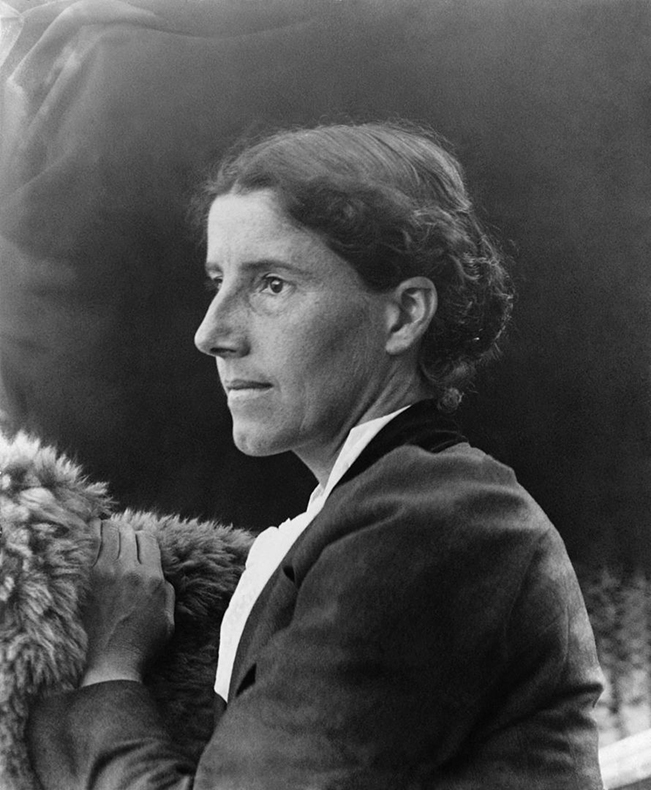
Charlotte Perkins Gilman was born in Hartford, Connecticut to a poor but literary family that included the famous 19th Century authors Harriet Beecher Stowe and Catharine Beecher. Her father abandoned the family shortly after her birth and her mother was infamously unaffectionate in order to steel Gilman against what she perceived as a cruel world. Gilman married artist Charles Stedman in 1884 and gave birth to a daughter, Katharine. Her experiences with post-partum depression and the rest cure inspired her most famous short story, “The Yellow Wallpaper” (1892). Realizing that she was not fulfilled by domestic life, Gilman made the rare choice to divorce Stedman, who quickly remarried a mutual friend. Leaving Katharine in the care of Stedman and his new wife, Gilman pursued her work as a writer and social activist. She worked tirelessly for women’s social and economic equality and formed the Women’s Peace Party with Jane Addams in 1915. After being diagnosed with incurable cancer, Gilman ended her life in 1935.
Gilman’s views about gender were controversial in her own time, but still relevant in our own. She is best known as a pioneering feminist, although it is important to note that she problematically held racist beliefs about immigration and segregation. She advocated for women’s equality not only in the public sphere of politics and the workforce, but in the private sphere of the home. Gilman believed that domestic labor like cooking, cleaning, and childcare should be completed by professionals, leaving women with the time to pursue their intellectual and professional lives. She reflects on these themes in detail in Women and Economics: A Study of the Economic Relation Between Men and Women as a Factor in Social Revolution (1898). Her political stance and commitment to women’s equality is clear in the short stories presented in this anthology.